eeeeeeeeeeeeeeeeeeeeeeeeeeeeeee

How to Trade Marijuana, Now That It’s Legal

At the minute it became legal, “Cannabis was “flying off the shelves” in retail outlets and online stores across the country as soon as the clock struck midnight Wednesday (October 17). The demand was so high that pot stores reported running low or completely out of cannabis on the first day,” according to the Canadian news site GlobalNews.ca. Sales were strong but costs varied widely. And, price is important because “Four out of 10 Canadians say the price will determine whether they buy their pot legally or on the black market as legalization approaches. That’s according to a Global...
More
eeeeeeeeeeeeeeeeeeeeeeeeeeeeeee

This Clear Cut Signal Could Have Helped You Miss the Market Crash

Technical indicators can be useful. But, many indicators require a subjective evaluation. This makes technical indicators challenging to use. Indicators or trading tools can be broadly classified as subjective or objective. A subjective tool is one that requires some degree of interpretation. For example, when looking at divergences, a popular tool for analyzing indicators, subjective judgments must be made. Objective indicators offer clear signals defined by rules that are known in advance. Moving averages are popular objective indicators. A less well known objective indicator is the AR...
More
eeeeeeeeeeeeeeeeeeeeeeeeeeeeeee

How to Know Exactly When the Next Bear Market Starts

Let’s face it. We all want to know when the next bear market will start. Fortunately, there is a way to know. There are actually many tools that will tell us exactly when the bear market starts. Of course, they all signal after the market turns. Even though signals from some tools will come after the down turn is underway, these signals could still provide a profitable warning. And, it could be that early signals are dangerous to your wealth. Early Can Be Devastating Stocks can be on a sell signal well before the market turns down.  The chart of the popular CAPE ratio is shown below to il...
More
eeeeeeeeeeeeeeeeeeeeeeeeeeeeeee

What Florence Could Mean for Stocks

It’s a familiar story. A hurricane makes landfall and devastates a large area of land. There is a sad story from a human perspective. This year, the story is centered in North Carolina. Factset summarized the financial impact in a headline that read, “Insurance Industry and Financials Sector Earnings at Risk Again Due to Hurricane Florence.” The analyst noted, “Hurricane Florence is expected to cause significant property damage and business losses across the southeast coast of the U.S. over the next few days." From a corporate earnings perspective, what sectors or industries in the S&...
More
eeeeeeeeeeeeeeeeeeeeeeeeeeeeeee

This is Where the Next Global Boom Could Start

It’s been ten years since Lehman Brothers collapsed, plunging the global financial system into chaos. Regulators and legislators have taken steps to ensure that crisis won’t happen again. But, like the general who is always fighting the last war, legislation and regulation can’t address the next crisis. That leaves investors and financial analysts always on the lookout for the next crisis. They have had several scares over the years with nearly endless crises in the euro zone and deep market plunges in China. Lesser known problems could also develop into unexpected problems. While China ...
More
eeeeeeeeeeeeeeeeeeeeeeeeeeeeeee

This Popular Indicator Can Be Improved Upon

Traders might disagree on whether a stock should be bought or sold. They might disagree on the name of the pattern they spot on the chart. But, one thing they do seem to agree on is that indicators should be added to charts because these tools are useful. The price chart depicts the price action and traders have been searching for patterns on the charts since at least the early 1900s. By the 1940s, many traders had added moving averages which were designed to highlight the trend. Then, they began adding indicators to charts as shown below. This is a chart of the SPDR S&P 500 ETF (NYS...
More
eeeeeeeeeeeeeeeeeeeeeeeeeeeeeee

Here’s What to Expect From Facebook

In many ways, the stock market is nothing more than a large pool of data. That means whenever something happens, even something that appears to be unprecedented, that is almost certainly a precedent. That’s the case with Facebook (Nasdaq: FB). A Bad Earnings Report Becomes a Very Bad Day for the Stock Facebook released its earnings for the second quarter shortly after the market closed last Wednesday. The stock sold off on the report which was not as strong as analysts had come to expect. As the conference call with management began, the stock was off about 10%. The problems began with...
More
eeeeeeeeeeeeeeeeeeeeeeeeeeeeeee

Bad News in the Employment Report Shows the Bull Market Is Near an End

Good news for the economy continues to appear. The Wall Street Journal noted that “Economists expect the low U.S. unemployment rate to go even lower over the next year, reaching levels not seen in a half-century. Private-sector economic forecasters surveyed in recent days by The Wall Street Journal on average saw the jobless rate—4% in June after touching 3.8% in May—falling to 3.7% by the end of 2018 and 3.6% by mid-2019.” It hasn’t been below that level since December 1969, when it was 3.5%. Unemployment has rarely been lower than it is now outside of wartime, when defense productio...
More
eeeeeeeeeeeeeeeeeeeeeeeeeeeeeee

Oil, Iran and Saudi Arabia

The price of oil is widely followed because oil is critical to economic growth. But, it’s also a chicken and egg type of question. Economic growth drives demand for oil. That raises the price of oil. But, high oil prices choke off economic growth. When oil is priced “just right” we have economic growth. Just right pricing also helps to maintain stability in one of the most volatile regions in the world, the Middle East. Right now, prices are higher than they were a year ago, but they seem to be just right. However, it seems unlikely prices will remain near their current level. The pri...
More
eeeeeeeeeeeeeeeeeeeeeeeeeeeeeee

The Best Way to Read a Chart

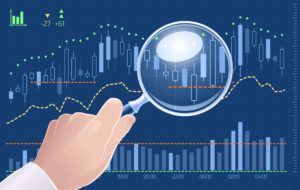
Chart reading has been the subject of analysis for almost 100 years. The first book on the subject was likely published in 1930. Richard W. Schabacker published Technical Analysis and Stock Market Profits, that year. It was originally a series of lessons but was in a book form by 1932. Schabacker covered reversal patterns, continuation patterns, trend lines, support and resistance, how to develop price targets from chart patterns and how to trade the patterns. It’s all been explained for many years yet many traders still struggle with charts. Buffett’s View on the Subject May Not Be Right ...
More